Pest movement should be checked before demolition Melbourne because demolition disturbs harbourage, food sources, wall cavities, roof voids, drains, sheds, and rubbish areas. While Victoria does not impose one blanket pest-inspection law for every project, owners and contractors still need to control foreseeable health, nuisance, and site risks before work starts.
The Legal Issue Is Risk Control
A pre-demolition pest inspection is best understood as a risk-control step, not a universal standalone permit requirement. Demolition duties already require safe planning, hazard identification, public protection, waste control, and site management. Pest activity can affect each of those duties.
Rodents, cockroaches, ants, spiders, birds, termites, and stored-product pests can move when a building is opened. If that movement affects neighbours, workers, food premises, shared walls, or temporary site offices, the problem becomes more than a nuisance.
Rodent Control Today readers already know that early detection saves money and protects health. On a demolition site, early detection also gives the contractor time to treat, exclude, clean, and document pest activity before the building is disturbed.
What Inspectors Look For Before Demolition
A useful inspection checks the areas most likely to hide pest activity. These include roof voids, wall cavities, subfloors, kitchens, laundries, garages, sheds, bins, drains, garden edges, compost areas, ceiling insulation, and service penetrations.
Signs include droppings, gnaw marks, rub marks, grease trails, nests, shredded insulation, damaged packaging, scratching noise reports, cockroach harbourage, ant trails, termite mud leads, bird fouling, and odour.
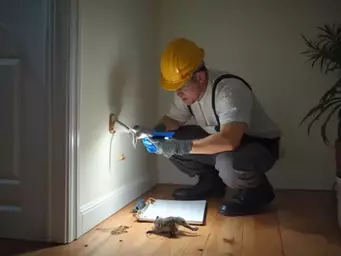
The inspection should also record entry points. Gaps around pipes, vents, doors, windows, broken cladding, roof edges, drains, and subfloor openings can let pests escape into nearby structures once demolition begins.
Why Demolition Can Spread Rodents
Rodents respond quickly to disturbance. Noise, vibration, light, dust, and loss of shelter can push them out of their hidden nests and into quieter areas. Shared fences, drains, wall cavities, roof spaces, and cluttered yards can become movement paths.
This matters most where homes sit close together or where the site adjoins shops, food businesses, garages, schools, or storage areas. A house demolition can disturb one property and create a rodent complaint next door if no inspection or treatment occurs.
Inspection gives pest controllers time to combine methods. Trapping, baiting, exclusion, sanitation, vegetation clearance, drain checks, and waste removal can all reduce pest pressure before walls and floors are opened.
Sanitation Is Part Of The Demolition Plan
Pest control is not only chemical treatment. It starts with removing attractants. Old food, pet feed, cardboard, bins, compost, standing water, grease, rubbish, and garden clutter can keep rodents and insects active until demolition day.
EPA Victoria's demolition guidance highlights the need to control waste, litter, dust, sediment, and wastewater. Pest prevention supports the same discipline. Covered bins, frequent collections, clean amenities, and dry storage reduce pest activity during the work.
A demolition site should not become an open feeding area. Workers need sealed lunch waste, secure bins, and clear rules for rubbish. Small habits prevent pests from returning while the structure is being removed.
● Inspect before demolition hides or spreads pest evidence.
● Treat active infestations before wall cavities and roof voids are opened.
● Remove food sources, cardboard, standing water, and rubbish early.
● Warn neighbours where shared walls, drains, or roof spaces create movement risk.
How To Document The Inspection
The inspection report should list areas checked, evidence found, areas not accessed, likely harbourage, entry points, treatment recommendations, and follow-up dates. Photos make the report easier for demolition crews to understand.
For rodent activity, document droppings, runs, nests, gnawed material, food sources, and possible entry points. For insects, document harbourage, moisture, cracks, voids, timber contact, and damaged material.
A clear report helps the owner, pest technician, demolition contractor, and neighbours understand the plan. It also prevents disputes about whether pest activity existed before demolition began.
When The Inspection Becomes Essential
A pest inspection becomes essential when there are droppings, nesting material, strong odour, food waste, long-term vacancy, hoarding, roof void access, known termite activity, bird nesting, or neighbouring food premises.
It is also important when demolition follows flood, fire, abandonment, or long vacancy. These conditions can create hidden pest activity and sanitation issues that are not obvious from the street.
If pest activity is found, demolition timing may need to change. Treatment should happen early enough to reduce pest pressure before the first major disturbance.
Planning Notes For This Audience
For rodent-control readers, the useful question is not whether pests are visible from the front gate. It is whether demolition will disturb hidden harbourage and push pests into a neighbouring structure.
Inspection should focus on movement routes. Drains, subfloors, roof voids, wall cavities, vine-covered fences, sheds, compost areas, and service penetrations can all help rodents move when the building is opened.
Treatment should be timed with the demolition programme. If baiting, trapping, exclusion, or sanitation starts too late, the first major disturbance can happen while the infestation is still active.
Documentation is part of pest control. Photos, bait station locations, treatment dates, sanitation notes, and follow-up recommendations help the owner show what was done before demolition began.
Records That Should Stay With The Project
A demolition project should leave a paper trail that helps the next trade, owner, adviser, or property manager understand what happened on site. Good records reduce arguments and make later decisions easier.
Keep permits, contractor details, asbestos reports, pest reports where relevant, service disconnection evidence, disposal receipts, recycling records, photos, and handover notes in one folder. Name each file clearly so it can be found months later.
The best photos show conditions before work, during major changes, and after clearance. Capture boundaries, retained trees, driveways, crossovers, slabs, service caps, drainage points, neighbouring structures, and any unexpected discoveries.
If the property will be sold, leased, rebuilt, or used for finance discussions, these records can support due diligence. They also help the next contractor price the job with fewer assumptions.
Budget And Timing Checks Before Approval
Before approving the work, compare the demolition quote against the full project outcome. A low removal price can still cost more later if it excludes permits, slabs, asbestos, pest treatment, service caps, concrete removal, traffic control, or final clean-up.
- Timing should be checked the same way. The right start date depends on service disconnections, inspections, neighbour notices, bin availability, access protection, weather, and the next contractor's programme.
- Add a contingency for discoveries inside walls, slabs, roofs, gardens, sheds, and buried services. Older Melbourne properties often contain undocumented changes, and those discoveries are cheaper to manage when the team has already allowed time and budget.
- The final approval should name what success looks like at handover. That may be a cleared block, a retained driveway, capped services, recyclable material records, a safe pest status, asbestos clearance, or a foundation-ready surface.
If one of those outcomes is not written into the scope, assume it may not be included. Clear wording is cheaper than renegotiating after machinery, bins, inspectors, or installers are already booked.
Confirm the scope in writing before deposits, notices, or delivery dates are locked.
Share the written scope with every adviser and contractor who will rely on the cleared site.
Quick Pre-Start Checklist
Before the first contractor arrives, turn the project into a short checklist with a named owner for each task. The checklist should be reviewed at induction and updated when the work changes stage.
Keep one site contact responsible for updates, because small discoveries can affect access, neighbours, waste handling, services, approvals, equipment choice, health controls, and final handover. Record every change before the next crew starts work.
● Confirm the exact demolition scope, exclusions, and required end condition.
● Check permits, asbestos risk, service isolation, access limits, and neighbour impacts.
● Mark retained trees, services, drains, fences, structures, and no-go zones.
● Separate waste streams early and keep disposal, recycling, and clearance records together.
● Photograph key site conditions before, during, and after the work.
Frequently Asked Questions
Is a pest inspection legally required before every Melbourne demolition?
There is no single blanket pest-inspection requirement for every project, but pest inspection can be necessary to manage foreseeable health, nuisance, neighbour, and site risks.
Why do rodents move during demolition?
Demolition removes shelter and food sources while adding noise, vibration, dust, and light. Rodents may move into nearby buildings, drains, sheds, or gardens.
What should a pest report include before demolition?
It should include evidence found, access limitations, harbourage areas, entry points, photos, treatment recommendations, sanitation tasks, and follow-up timing.